

Building an Effective Communication Strategy for Volunteers
Volunteers are the lifeblood of numerous organizations, driving impactful change across communities and industries. However, to fully leverage their passion and skills, organizations need a well-defined communication strategy. This article provides a detailed guide to understanding and implementing an effective communication strategy tailored for volunteers.
What is a Communication Strategy for Volunteers?
A communication strategy for volunteers is a systematic approach that defines how an organization interacts with its volunteer base. It ensures clarity, engagement, and alignment with organizational goals. Here are five critical components of a volunteer communication strategy:
Defining Goals and Objectives
Establish the purpose of your communication, such as enhancing retention, improving task allocation, or increasing engagement.
Clear goals provide direction and help evaluate the strategy's success.
Identifying Target Audiences
Understand the diverse backgrounds, motivations, and preferences of your volunteers.
Segment your audience to tailor messages effectively.
Selecting Communication Channels
Choose the right mix of channels, including email, social media, face-to-face meetings, and messaging apps.
Different activities may require different communication methods.
Crafting Key Messages
Develop concise and impactful messages that resonate with volunteers.
Emphasize their value and role in the organization’s mission.
Measuring Success
Use metrics like response rates, volunteer satisfaction, and retention to assess your strategy.
Adjust your approach based on feedback and results.
Why is a Communication Strategy Important?
An effective communication strategy offers multiple benefits for both volunteers and organizations:
Enhanced Coordination
Volunteers are better equipped to fulfill their roles when they have clear information and guidance.Increased Engagement
Consistent communication fosters a sense of belonging and encourages active participation.Improved Retention
Volunteers who feel valued and informed are more likely to remain committed.Reduced Misunderstandings
Clear and transparent communication minimizes confusion and errors.Stronger Relationships
A good strategy builds trust and rapport between volunteers and the organization.
Where is it Used?
Effective communication strategies are vital across various volunteer management scenarios:
Event Planning
Ensure volunteers know their roles, schedules, and responsibilities for smooth event execution.Crisis Management
Provide timely and accurate information during emergencies to maintain calm and order.Training and Onboarding
Share essential resources and guidelines to prepare new volunteers for their tasks.Ongoing Updates
Keep volunteers informed about organizational milestones, upcoming activities, and success stories. Monthly newsletters have been found to be ineffective and often go unread. Instead, tools like Givunity can be used to communicate directly with individual volunteers or groups, providing timely and targeted updates.Recognition
Celebrate achievements and express gratitude to boost morale and motivation.
Nuances of Implementation
Implementing a communication strategy requires attention to these nuances:
Cultural Sensitivity
Tailor communication to respect diverse cultural backgrounds and perspectives.Frequency of Communication
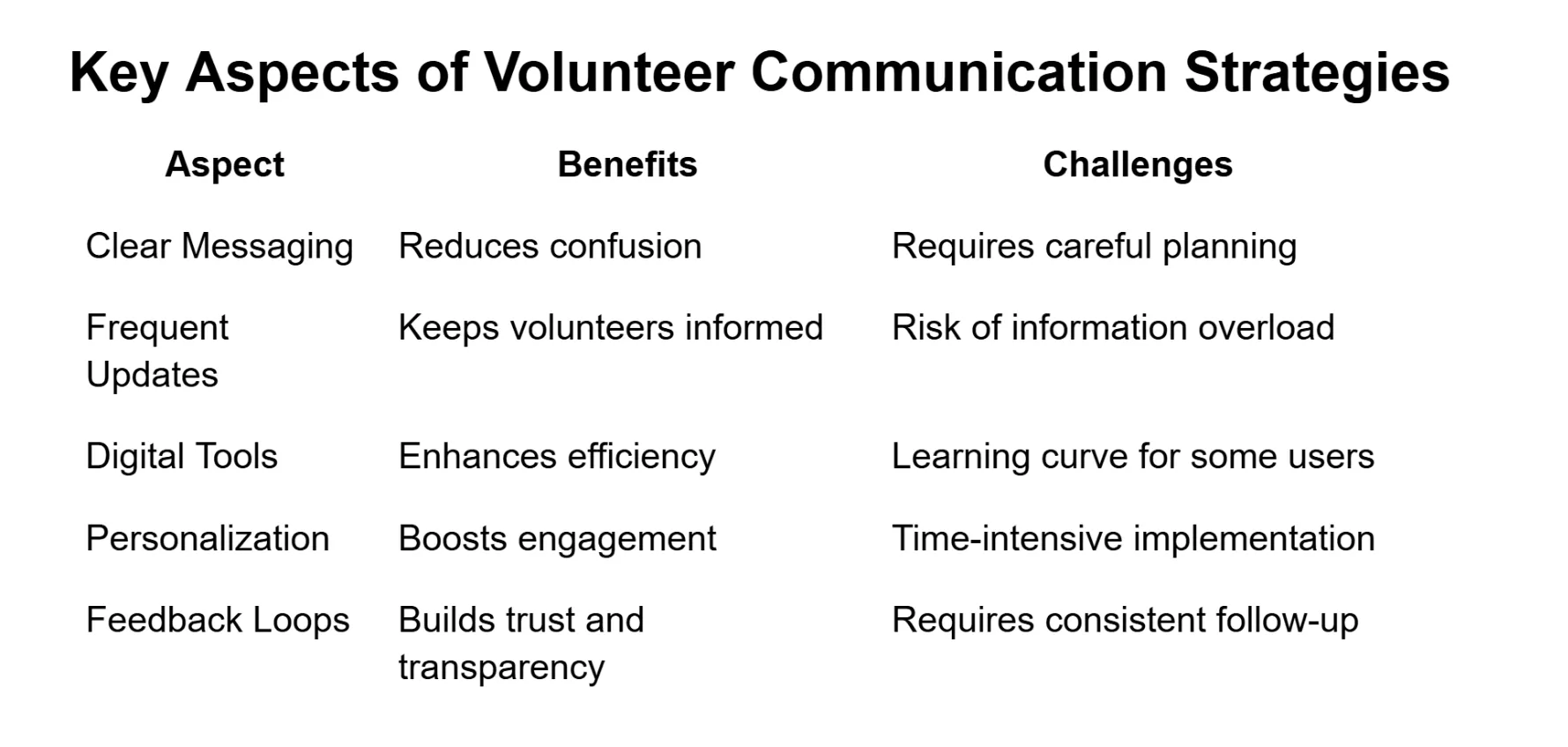
Avoid overwhelming volunteers with excessive information; maintain a balanced frequency.Personalization
Address volunteers by name and acknowledge their unique contributions for deeper engagement.Feedback Mechanisms
Create channels for volunteers to share their thoughts and improve communication.Technology Adoption
Utilize tools like Slack, Trello, or Givunity to streamline communication, while ensuring ease of use.
Expert Tips for Success
Experts recommend the following practices for creating a successful volunteer communication strategy:
Conduct Regular Surveys
Gather feedback to ensure the strategy aligns with volunteer expectations.Invest in Training
Equip team leaders with communication and interpersonal skills to manage volunteers effectively.Leverage Storytelling
Use real-life success stories to inspire and connect with volunteers emotionally.Be Transparent
Clearly share organizational goals, challenges, and achievements to build trust.Celebrate Successes
Regularly recognize and reward volunteer contributions through shout-outs, events, or small tokens of appreciation.
Frequently Asked Questions (FAQs)
1. What is the main purpose of a communication strategy for volunteers?
The purpose is to ensure volunteers feel informed, engaged, and aligned with the organization's mission while fostering a sense of belonging.
2. How often should organizations communicate with volunteers?
For active projects, weekly updates work well. For broader updates, monthly newsletters are less effective. Real-time tools like Givunity are better suited for impactful communication.
3. What tools can improve volunteer communication?
Tools like Slack for instant messaging, Trello for task management, and Givunity for direct and group updates are excellent options for effective communication.
4. How can organizations manage communication with remote volunteers?
Video calls, cloud-based collaboration tools, and timely email updates help bridge communication gaps with remote volunteers.
5. Why is volunteer feedback essential?
Feedback highlights areas for improvement, ensuring the strategy remains effective and adaptable to changing needs.
Conclusion
A strong communication strategy is the cornerstone of any successful volunteer program. By focusing on clarity, engagement, and alignment, organizations can ensure their volunteers feel valued and motivated. This not only enhances the overall impact of volunteer efforts but also strengthens relationships within the organization.
Whether you’re managing a small team or a large network of volunteers, investing in a thoughtful communication strategy will pave the way for sustained success and meaningful contributions to your mission.